Campaigns
Campaigns That Move Buyers
Reach the buyers who are not looking yet. Convert the ones who are. Run by a fractional CMO.
The Problem
Activity is easy to count. Movement is not.
Campaign reporting counts sends, opens, posts and MQLs. None of it tells you whether a buyer got closer to choosing you. A deal that has gone quiet looks exactly like one that is still warm, until the quarter closes without it.
Underneath that sits a harder number. Roughly 5% of your market is buying right now. Campaigns aimed only at them fight over a sliver, while the people who will buy next year forget you exist.
What Runs
Four things, on a schedule
Creating demand and capturing it are not competing budgets. Content and events build the audience. Sales campaigns convert it.
Content engine
Social, video, thought leadership and the blog, turned into a weekly cadence rather than an occasional push. See B2B social.
Sales and list campaigns
Targeted outreach, nurture, and reviving deals that stalled. Built as plays your sales team runs, against your existing list.
Events
The anchors in the year. Conferences, webinars, and the follow-up that turns a badge scan into a meeting. See B2B events.
Search and paid
SEO and answer-engine optimisation so you are found, with paid where it accelerates rather than substitutes.
Where Campaigns Come From
Derived from your blueprint, not a channel calendar
Most campaign planning starts with a calendar and works backwards toward a reason. These start from the GTM Blueprint. The conversations you have decided to own set the themes that earn attention. Your bets set the sales plays that turn that attention into pipeline.
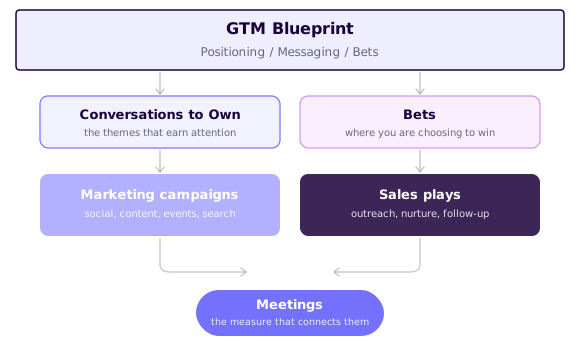
Both come from the GTM Blueprint, so marketing and sales are aimed at the same outcome from the start rather than aligned after the fact. You can tell it is working because the measure connecting them is meetings created, not activity logged.
It also means nobody re-explains your company to an AI tool every time they open one. The claims you can make, the proof behind each, and the words that sound like you are already written down.
How It Runs
A year, planned back from a revenue target
Events anchor the year. Marketing runs ahead of them to build the audience. Sales works the list afterwards, and the pipeline compounds instead of restarting each quarter.
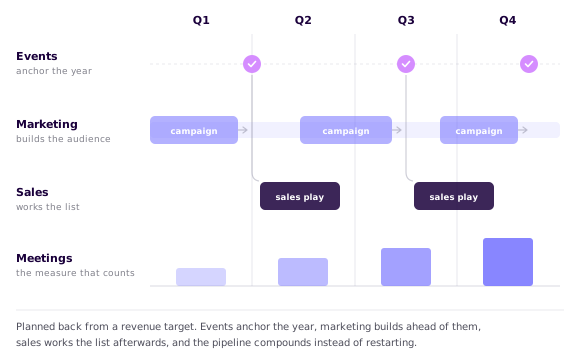
What the plan does not fix is timing. A sequence authored in advance treats every contact as though they are shopping today. Here the plan sets what runs, and what a buyer actually did sets when they hear from you. Drafts get prepared. A person decides what goes out.
What It Runs On
A senior operator, and three things they work from
Campaigns are run by a senior marketing leader from the Outcome Marketing network. Depending on what you need, that is one of our principals, a fractional CMO, or an agency with depth in your category. The judgment is what you are buying.
Your blueprint
What to say, to whom, and why you win. It comes out of the Competitive Diagnostic and the GTM Blueprint, and your website is where campaigns land.
Your data
Your CRM stays the system of record for deals. Where our operating layer is in place, it adds what actually happened in email, calendar and meetings.
AI tooling
Speed, grounded in your blueprint rather than starting cold every time. The same tools everyone has, fed by a strategy only you have.
Campaigns do not invent messaging. They carry the blueprint's, and voice of customer research keeps it in your buyers' language rather than your own. If a campaign says something your site does not, the campaign is wrong. This is also where demand generation strategy stops being a plan and becomes work that ships every week.
Proof
We drink our own champagne
The content cadence behind this site, the weekly social, the monthly OM Live episodes and the follow-up that comes out of them all go through the same system a client gets. The standup arrives every weekday morning and the digest every Friday.
Frequently asked questions
-
No. The agent composes drafts and decides what the next touch should be, based on the campaign brief and what has actually happened with that relationship. A person reviews it and a person sends it. That does not change as the tooling matures. If you have been burned by an AI outreach tool that mailed your list into a spam folder, this is the opposite arrangement.
-
No, and we would push back if you offered. Your CRM stays the system of record for deals and pipeline. Running opportunities in two places creates reconciliation work and an argument about which number is right, which is not a trade worth making. What the operating layer adds is the layer above the deal: the campaign cadence, the follow-up that is owed, and a record of what actually happened with each relationship, drawn from real activity rather than from what was typed into a field. Your sales team keeps working where they work.
-
Your fractional CMO builds the brief: the target list, the messaging, the offer, the goal, and how it will be measured. Then the supporting assets, the landing pages, and the sales enablement to go with it. Your sales team and your fractional CMO run it through the marketing automation you already have.
Outbound runs against your existing list. Building or buying a list is scoped separately.
-
The difference is what they own, not what they are called. A typical agency engagement means someone runs campaigns for you and reports on the results. Here a senior marketing leader owns the strategy those campaigns serve and builds the capability inside your team while running them, so when the engagement ends your sales team keeps the plays and the reasoning behind them. Some of the operators in our network are agencies working exactly this way. The campaigns also trace back to a GTM Blueprint rather than to a channel plan, so they argue a position instead of filling a calendar.
-
A GTM Blueprint, or the Competitive Diagnostic to build one. Campaigns derive from it, so that comes first. Then whatever marketing automation you already run, and a kickoff to agree the calendar and the first campaigns.
If you want our operating layer underneath it as well, that currently needs Google Workspace and an administrator to approve the connection. It reads email, calendar and meeting transcripts to work out where each relationship stands. Access is read-only and nothing is ever sent on your behalf. Data handling for the engagement is set out in your agreement; our own practices are in the privacy policy. Microsoft 365 is not supported yet; the campaign work runs either way.
See what your year would look like
One conversation about the calendar, the campaigns that fill it, and who runs them.
Talk to Advisor